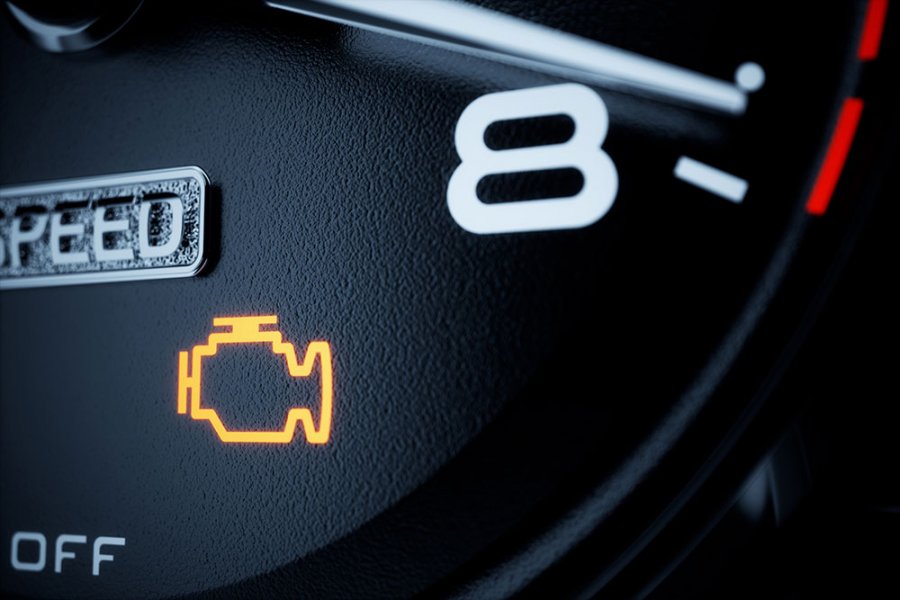
Santa Clarita summers are hard on vehicles. When the thermometer climbs past 95° and you're crawling up the 5 with the A/C on full blast, your engine is working harder than it does any other time of year. So when that little amber engine icon lights up on your dash in July, it usually isn't a coincidence.
Here's what a check engine light actually means, why heat makes it more likely, and how to tell the difference between "get it looked at soon" and "pull over now."
What Does the Check Engine Light Actually Mean?
Your vehicle's computer — the ECM, or engine control module — constantly monitors dozens of sensors across the engine, transmission, fuel system, and emissions system. When one of those readings falls outside the expected range, the computer stores a diagnostic trouble code (DTC) and turns on the check engine light to tell you something needs attention.
The light is a symptom, not a diagnosis. It doesn't tell you what's wrong. It tells you that something is wrong, and that a trained technician needs to read the codes, interpret the live data behind them, and test the system to find the actual cause.
Solid Light vs. Flashing Light
- Solid or steady light: A fault has been detected. It's not an emergency, but it won't fix itself, and driving on it can turn a small repair into a large one. Get it diagnosed within a few days.
- Flashing or blinking light: This means an active engine misfire is dumping raw fuel into your exhaust. That can destroy a catalytic converter in a matter of minutes — a repair that often runs into four figures. Stop driving and call a shop.
Why Summer Heat Triggers More Check Engine Lights
Heat doesn't just make your car uncomfortable. It changes how components behave, and it exposes weaknesses that stayed hidden all winter. These are the summer-specific causes we see most often at our Santa Clarita shop.
1. EVAP System and Fuel Vapor Leaks
Your evaporative emissions (EVAP) system captures fuel vapor from the gas tank so it doesn't escape into the air. High temperatures increase vapor pressure inside the tank, which means a small leak that went unnoticed in January will absolutely set a code in July. EVAP codes are one of the most common check engine light causes we see all summer.
The good news: sometimes it really is a loose, cracked, or worn gas cap. Tighten it, and if the light stays on after a few drive cycles, the leak is somewhere else — a hose, the purge valve, or the charcoal canister.
2. Oxygen Sensors and Catalytic Converters
Oxygen sensors live in a brutal environment, and sustained high underhood temperatures accelerate their wear. A lazy or failing O2 sensor throws off the air-fuel mixture, which hurts fuel economy and puts extra strain on the catalytic converter. Replace the sensor early and you protect the converter. Ignore it and you may end up replacing both.
3. Cooling System Problems
A weak water pump, a thermostat stuck open, a failing radiator fan, or low coolant will all show up faster in 100° weather than in mild conditions. Some cooling faults set a check engine light through the coolant temperature sensor before the temp gauge ever moves. If your light comes on and the gauge is climbing, shut the engine off — overheating causes head gasket and cylinder head damage very quickly.
4. A/C Load on the Engine
Running the air conditioning adds a real mechanical load to your engine. That extra demand can reveal an already-marginal ignition coil, spark plug, or fuel delivery issue that a cooler engine could compensate for. A lot of summer misfire codes are really spring problems that finally ran out of margin.
5. Battery and Charging System Issues
Most people associate dead batteries with winter, but heat is what actually kills them. High temperatures accelerate the internal corrosion and fluid evaporation that shorten battery life — winter cold just finishes off a battery that summer already damaged. Low system voltage can cause erratic sensor readings and set codes that look unrelated.
6. Vacuum Leaks from Aged Rubber
Heat cycling makes rubber hoses and plastic intake components brittle. When one cracks, unmetered air enters the engine and you get a lean condition code, a rough idle, or both.
Is It Safe to Drive with the Check Engine Light On?
It depends entirely on what's causing it. Use this as a quick guide:
- Light is flashing: No. Stop driving and get it towed or inspected immediately.
- Light is on and the car drives normally: Usually safe for short trips, but schedule a diagnostic. Emissions and sensor faults get more expensive the longer they run.
- Light is on with rough running, hesitation, loss of power, or strange smells: Drive directly to a shop or have it towed.
- Light is on with a rising temperature gauge: Pull over safely and shut the engine off.
One more thing worth knowing: a vehicle with an active check engine light will not pass a California smog check. If your registration is coming up, that light needs to be resolved first.
Why a Free Code Scan Isn't a Diagnosis
A parts store will read your code for free, and that's genuinely useful information. But a code tells you which circuit or system reported a problem — not which part failed. A P0420 code, for example, doesn't mean "buy a catalytic converter." It means the computer sees an efficiency problem downstream, which could be the converter, an oxygen sensor, an exhaust leak, or a misfire feeding unburned fuel into the system.
Replacing parts based on a code alone is how people spend $1,200 and still have the light on. A real diagnostic uses the code as a starting point, then verifies the fault with live data, scope readings, smoke testing, and manufacturer-specific procedures.
How PACC Automotive Diagnoses Check Engine Lights
Our ASE-certified technicians work on both foreign and domestic vehicles, and we use professional-grade diagnostic equipment to test the actual cause before we recommend a repair. We'll explain what we found in plain language, show you the evidence, and give you a clear estimate before any work begins.
Every repair and every part is backed by our 2-year/24,000-mile warranty. We use quality ACDelco parts and premium BG Products, and we'd rather teach you how to prevent the next problem than sell you a repair you don't need. That's why our customers have been coming back for 15 years and more.
Learn more about our check engine light diagnostic service, or browse all of our auto repair services.
Frequently Asked Questions
Why did my check engine light come on right after I got gas?
The most common cause is a gas cap that wasn't tightened until it clicked, or one with a worn seal. The EVAP system detects the pressure loss and sets a code. Tighten it and drive normally — the light may take several drive cycles to clear on its own. If it doesn't, you likely have a leak elsewhere in the system.
Can hot weather really cause a check engine light?
Yes. Heat raises fuel vapor pressure, accelerates sensor and battery wear, adds engine load through the A/C system, and stresses the cooling system. Marginal components that functioned fine in mild weather often fail their diagnostic thresholds once temperatures climb.
Will the check engine light turn itself off?
Sometimes. If the fault was intermittent and the condition clears, the computer will turn the light off after a number of successful drive cycles. But the stored code stays in memory, and the underlying problem usually returns. A light that comes and goes still needs to be diagnosed.
How much does a check engine light diagnostic cost?
It depends on the complexity of the fault. Some issues are confirmed in minutes; others require extended testing. Call us at (661) 253-3123 and we'll tell you exactly what to expect before you commit to anything.
Can I still pass smog with the check engine light on?
No. An illuminated check engine light is an automatic failure in California, regardless of how the vehicle runs.
Get Your Check Engine Light Diagnosed in Santa Clarita
Don't spend the summer hoping the light goes away on its own. Whether it's a $30 gas cap or an early warning of something bigger, finding out now is always cheaper than finding out later.
PACC Automotive
23520 Valencia Boulevard, Suite H
Santa Clarita, CA 91355
Phone: (661) 253-3123
Hours: Monday–Friday, 8:00 AM – 5:00 PM
Web: paccauto.com
Contact us or get directions to our Valencia Boulevard shop. Join the PACC.